Why Municipalities Use Brine — and Should Your Strata Consider It?
Published · BrineSalters.com editorial
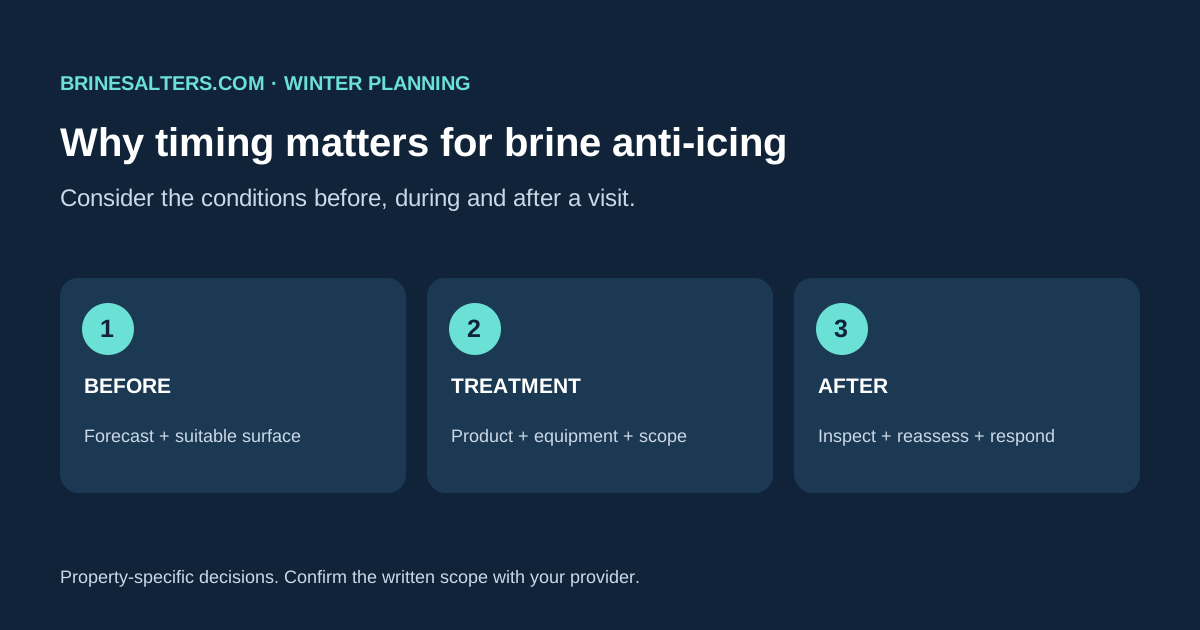
What municipal anti-icing can teach a strata council about timing, surface suitability and a coordinated winter service plan.
Those lines on a road ahead of a cold spell can prompt a sensible question: should our strata be looking at brine too? The useful starting point is the purpose of the treatment and the conditions it needs. Your parking area, walkways and concrete finishes deserve their own review.
Why does a municipality apply brine before an event?
The City of Surrey describes pre-treating dry major arterial roads with liquid salt brine when snow or icy conditions are forecast. Its anti-icing program aims to make ice formation more difficult and snow easier to remove. Surrey also uses forecasting and road-condition information to guide dispatch.
For a property owner, the takeaway is timing: ask about suitable treatment before the expected icy period, with a plan to inspect and respond afterward. Copying a road-treatment schedule onto a small residential walkway is not a site assessment.
Where might a strata consider it?
Start the discussion around vehicle access, parking lanes and agreed pedestrian routes. The contractor should review the surface, slopes, drainage, expected weather and the proposed product. Ask which areas could receive liquid treatment and which need another approach. A new concrete entrance or decorative finish deserves specific attention.
For a Fraser Valley property, provide your address and explain how residents use the building. A steep entry in Mission, a shared parking lot in Abbotsford and a covered walkway in Langley can present very different access questions. Location alone cannot determine the treatment.
What changes the decision?
- Surface conditions: ask how pavement temperature and moisture will be assessed.
- Rain and changing weather: ask when an application would be postponed or reassessed and how the contractor checks the result.
- The finish: provide concrete, sealer and paving-care instructions before any product is selected.
- Access: agree how parked vehicles, stairs and narrow paths will be handled.
- Follow-up: confirm who inspects and how a return visit is requested.
Is brine automatically safer for concrete or the environment?
No universal promise belongs in a winter proposal. Brine contains salts, and product choice and use still matter. Environment and Climate Change Canada's road-salts code includes salt solutions and encourages management practices that address environmental effects. Ask how your service provider selects material, controls application and considers drainage and nearby landscaping.
For new or stamped concrete, obtain the surface supplier's advice and share it with the contractor. Neither a municipal example nor the word “brine” proves that a treatment is suitable for that finish.
Should you buy equipment or book a service?
If a trained property team will operate equipment, discuss storage, refill arrangements, servicing and the actual routes with a qualified supplier. If you prefer coordinated visits, request a written scope covering treatment, inspections and snow clearing. Browse brine sprayers and salters or use the first-frost property checklist to prepare your enquiry.
Discuss your strata with PlowWow
Request a site review for your Lower Mainland property. Include the address, photos and priority access times. PlowWow can discuss eligibility and current route availability; a written proposal should define the service you are booking.