Answer centre
Brine, salting and de-icing questions—answered.
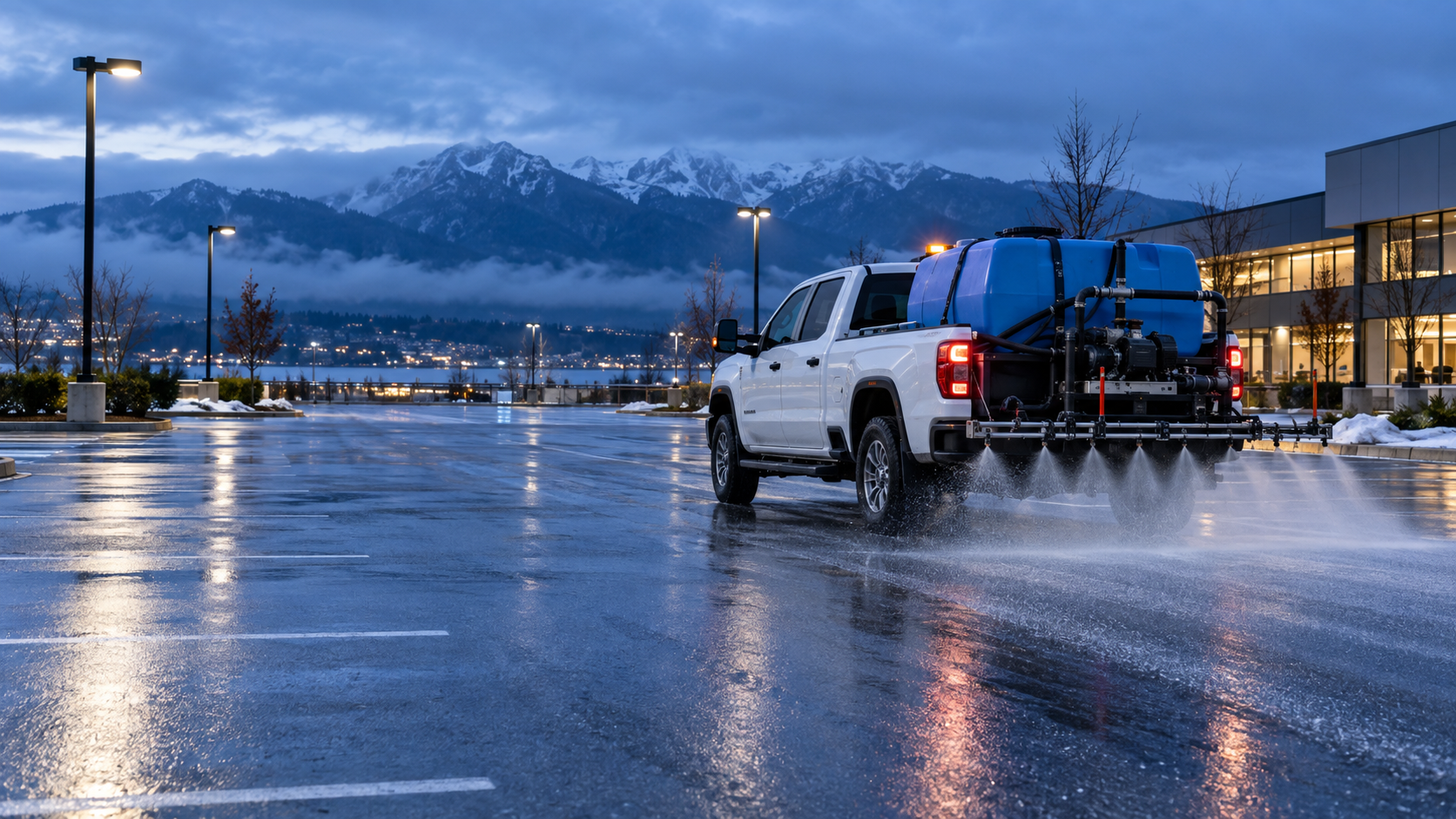
Clear answers for property teams, strata councils, facility operators and winter contractors.
What is liquid brine?
A water-and-salt solution used in suitable conditions for preventive anti-icing or as part of a de-icing program.
What is the difference between anti-icing and de-icing?
Anti-icing is preventive treatment before suitable events. De-icing addresses frozen material or a bond that already exists.
Does brine replace snow plowing?
No. Accumulating snow still requires mechanical clearing. Brine can help reduce bonding at the pavement surface.
When should a property be pre-treated?
Timing depends on pavement temperature, forecast precipitation, product choice and the expected start of the event.
Why does pavement temperature matter?
De-icer performance occurs at the pavement, which can be warmer or colder than the surrounding air.
Can brine be applied during rain?
Rain can dilute or wash material away. The expected transition and timing must be reviewed.
Is brine safe for concrete?
Compatibility depends on the product and the surface's age, condition and requirements.
Is brine safe around landscaping?
No de-icer is impact-free. Measured application, drainage awareness and avoiding overspray reduce unnecessary exposure.
How much brine should be applied?
There is no universal rate. Product documentation, conditions, objectives and calibrated equipment determine the plan.
Why calibrate a sprayer?
Calibration connects output, travel speed and treatment width to a repeatable application rate.
What equipment applies liquid brine?
Common systems include truck-mounted tanks and spray bars, skid units, hose reels and walk-behind sprayers.
How is a sprayer sized?
Measure route area, target rate, refill interval, available payload and application width.
Can a brine tank overload a pickup?
Yes. Vehicle payload, axle loading, securement and tank baffling must be reviewed.
What should commercial sites prioritize?
Emergency access, main lanes, loading areas, accessible stalls, entrances and pedestrian routes.
Are sidewalks included with lot salting?
Only when listed in the scope. They require different labour, equipment and timing.
Why do parkade ramps refreeze?
Shade, wind, drainage, tracked moisture and thermal mass can keep ramps colder than nearby pavement.
Do industrial yards need a different plan?
Yes. Trailer movement, gates, shift changes and restricted areas affect treatment sequencing.
What belongs in a service record?
Arrival, observed conditions, serviced areas, material used, exceptions and follow-up notes.
Does treatment guarantee a slip-free surface?
No. Conditions change continuously; inspection, clearing, treatment and access controls may all be required.
Who provides actual service?
Eligible Lower Mainland commercial and strata enquiries are handled through PlowWow's active routes.
Is emergency service always available?
No. Availability depends on conditions and route capacity, and seasonal clients may receive priority.
Which cities are covered?
Planning pages cover Metro Vancouver and the Fraser Valley; service is confirmed property by property.
Can I request material supply?
Use the contact page with required product, volume, storage and timing; availability must be confirmed.
Are the equipment images specifications?
No. Generated images illustrate common layouts; actual installations follow manufacturer requirements.