Technical field guide
Anti-Icing vs. De-Icing
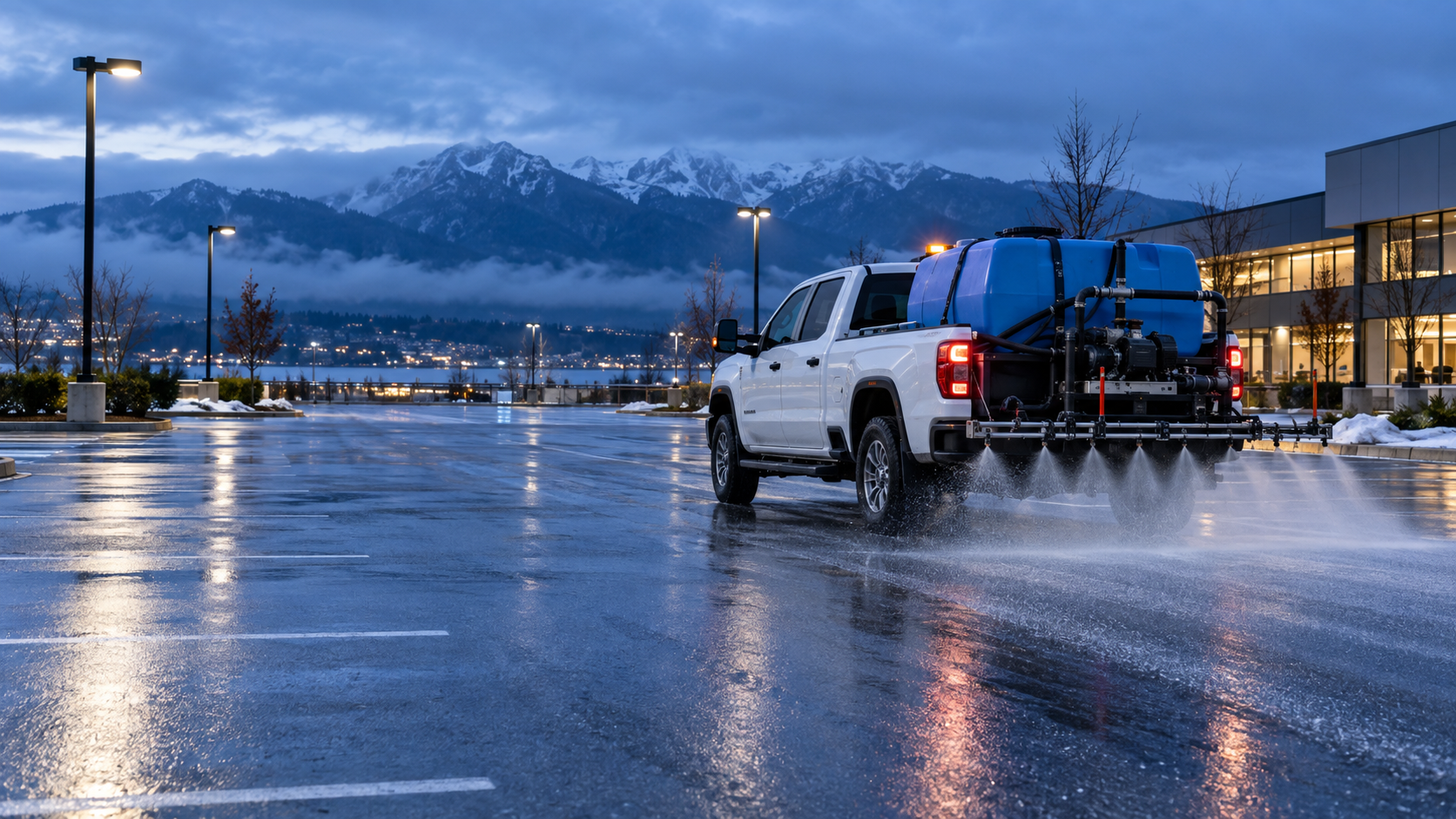
Anti-icing is a preventive treatment applied before suitable events; de-icing addresses a bond or accumulation that already exists.
Different timing, different objectives
Preventive anti-icing aims to limit bonding before suitable freezing conditions. Reactive de-icing addresses material already bonded to the surface. Accumulated snow still needs mechanical clearing.
A property-team decision sequence
- Inspect whether the surface is dry, wet, covered or bonded.
- Review pavement temperature and its expected trend.
- Check precipitation timing: rain may dilute or remove a treatment.
- Select a method within the product documentation.
- Arrange a return inspection when conditions change.
Ask for a scope
A useful proposal explains triggers, priority areas, records and responsibility for inspections. Ask how a change from rain to freezing conditions affects the plan.
Document conditions
Review the forecast, pavement temperature, surface condition, drainage and product label. Record what was applied, where and when. Reassess after traffic, precipitation or temperature changes.
Build a repeatable process
- Define the treatment objective before choosing material
- Use equipment suited to the target surface
- Calibrate output instead of relying on a dial position
- Inspect results and document changing conditions
Apply the guidance to a real property
For Lower Mainland commercial service, ask PlowWow to review the site and winter priorities.
Visit PlowWow